bom mesmo é estar debaixo d'água is luedji luna's second album
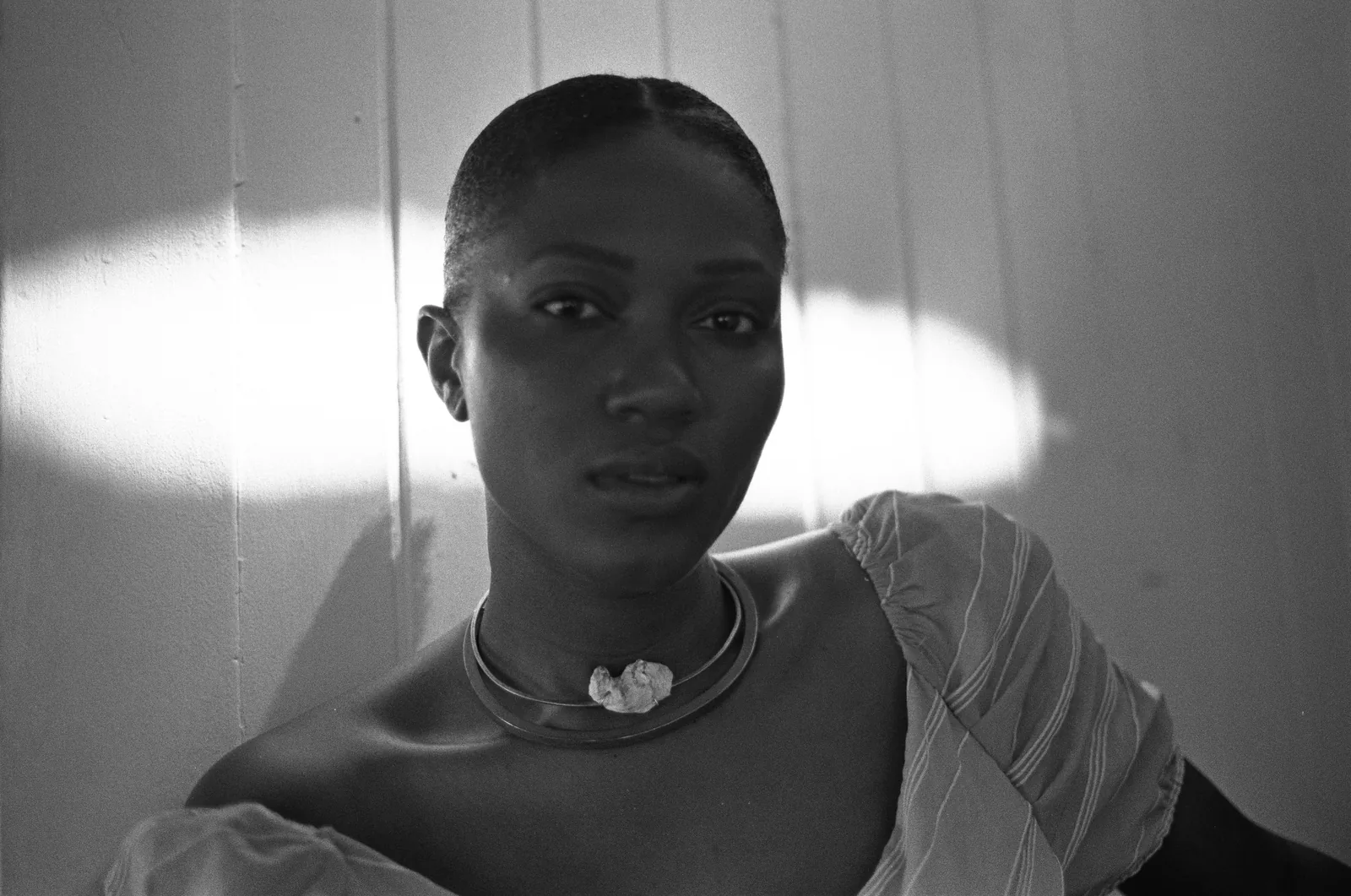
Bom mesmo é estar debaixo d'água is the title of the new album by Bahian singer-songwriter Luedji Luna. Three years after the release of her first record, the acclaimed Um Corpo no Mundo, the second work inaugurates a new moment in the singer's career and life: motherhood.
"I feel doubly a mother, and I am about to give birth to my second child. The entire process of conceiving the album, pre-production, and recording took place during my pregnancy, so this is a work shaped by that great portal that is motherhood."
Besides the album, the project included the recording of a film directed by Joyce Prado, winner of the WME (Women's Music Event) award in the "best music video director" category and co-founder of APAN (Associação do Produtores do Audiovisual Negro). One of the singer's main creative partners, she also directed the video for the hit "Banho de Folhas," which now has more than 5 million views on YouTube.
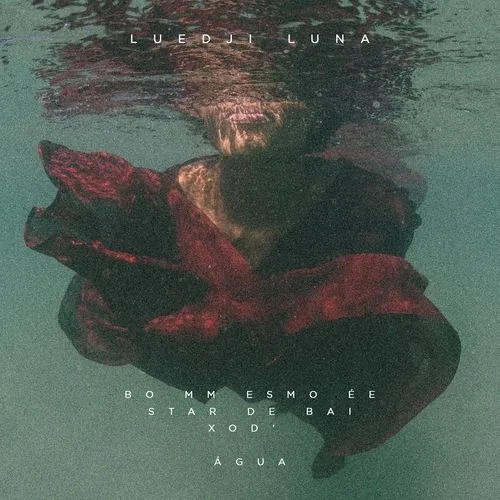
The new album reflects on the affectivity of Black women through the singer's view of her own romantic experiences, shaped by her condition as a woman and as a Black woman. The record also reflects on the impact of a sexist and LGBT-phobic society on the formation of the subjectivity of these bodies. On the theme, the singer explains: "How do these forms of oppression cut across the subjectivity of Black women? How does society see Black women in the realm of affection? How do Black women express that affection?"
The project is grounded in the idea of answering these and other questions, and arises from the need to build a different imaginary on the subject, from another narrative in which Black women have the autonomy to express their feelings and desires. In that sense, the album emerges to counter and to create a different poetic reference: "in my song the Black woman is a muse!"
Taking water as its reference, an element tied to emotions and to Oxum, the African orixá tied to love and motherhood, "Bom Mesmo É Estar Debaixo D'água" is a fluid album, with songs that talk to one another and present multiple Black and female voices on the theme. The track "Ain't' got no" features an excerpt from a poem by writer Conceição Evaristo, one of the main inspirations in the singer's career. The song "Lençóis," in turn, is co-written by writer Cidinha da Silva and features the participation of Brasília poet Tatiana Nascimento, who also wrote the song that closes "Um Corpo no Mundo," "Iodo+ Now Frágil." There are two other partnerships as well: "Recado," co-written by the singer and Bahian poet Dejanira Rainha Santos Melo, and "Erro," a collaboration with Marissol Mwaba, one of the authors of "Notícias de Salvador," her first album.
"It is an album of songs written in partnership, mostly, with only one song written solely by me, and two where I am only the interpreter: "Ain't got no" and "Origami". I think writing with other people took me down other melodic paths, and that undoubtedly gives the album a sound distinct from Um corpo no mundo. However, some things repeat: Cal Ribeiro, Tatiana Nascimento, François Muleka and Marissol Mwaba were present in some way on my first album and are also on the new one. Ravi Landim, Cidinha da Silva and Dejanira Rainha are new encounters," says Luedji.
The album repeats some formulas from the first one: the cohesion among songs tied to a central theme, the lightness of Luedji's voice combined with the strength of her lyrics, and Africa as a compass. If on "Um Corpo no Mundo" she was present in the diaspora, on this album the singer literally travels to the continent to record, more precisely to Kenya, where she works with musicians from Burundi and Madagascar. The music production is credited to Kenyan guitarist Kato Change and to Luedji Luna herself, who explains: "Kenya was the first country I visited on the African continent, where I formed close relationships with the people and culture there. If in Um corpo no mundo I was looking for an ancestral Africa, in Bom mesmo é estar debaixo d'água I am looking for a modern, up-to-date Africa. I had been listening a lot to artists of the new generation from Nigeria, Cape Verde and Ghana, and I used instruments that had not been used on the first album: drums and keyboard were included, while percussion - which was the center of the previous album - appears only on a few songs. Wind and string arrangements were added here in Brazil at the Redbull studio. I feel the sound of the album changes, and it was a deliberate search, but there is still a lot of coherence with what was produced on the previous album, the same identity. It's me!"
Yes, Luedji Luna's new album is her in essence: lightness and strength. The album's 12 tracks move between jazz and African rhythms, and are like a dive into the warm waters of Bahia. Sophistication and boldness, traits the Bahian songwriter has shown since her first work, the album is political without being preachy, romantic without being cliché. She innovates once again.
In times of hatred and uncertainty, love will rise from the ashes, or from the sweet voice of a woman!
The album is available on all digital platforms.